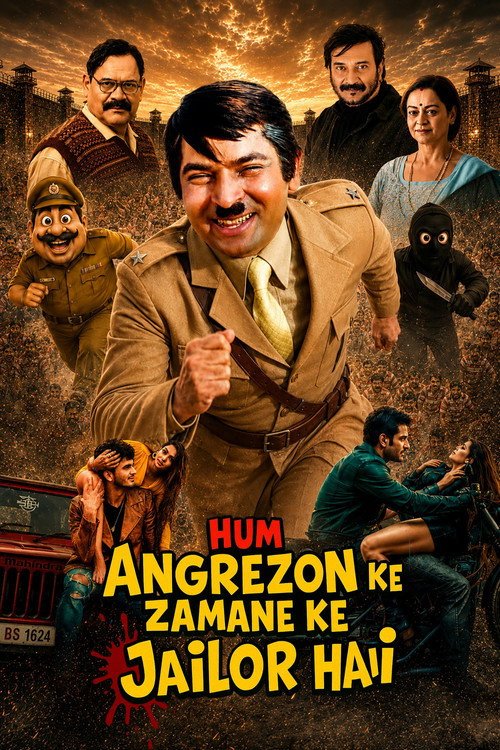
| ⭐ Rating | 0.0/10 | 📅 Year | 2026 |
| ⏱ Runtime | 2h 0m | 🎭 Genre | |
| 🎬 Director | Rakesh Sawant | 🎭 Cast | Asrani, Bhanwar Singh Pundir, Milind Gunaji, Zarina Wahab, Raksha Gupta |
Introduction
In the realm of Indian cinema, “Hum Angrezon Ke Zamane Ke Jailor Hai” (2026), directed by Rakesh Sawant, is a curious addition to the genre of historical crime. Set against the backdrop of colonial India, this film delves into a murder investigation that unravels a family’s deep-seated secrets. Despite its ambitious premise, the film struggles to reach its full potential.
Story Overview
“Hum Angrezon Ke Zamane Ke Jailor Hai” is a period drama that centers around a murder investigation in a small town during the British colonial era. The protagonist, played by Asrani, is a seasoned jailor whose life intersects with that of a local family embroiled in a web of lies and deceit. The story begins when a prominent member of the community is found dead under mysterious circumstances. Two determined officers, one from the British administration and the other a local constable, are assigned to solve the case. As they delve deeper, they uncover secrets that have been buried for generations, threatening to destroy the lives of those involved. The narrative is a blend of historical intrigue and family drama, with moments of suspense and occasional bursts of emotion.
Direction & Screenplay
Director Rakesh Sawant’s approach to “Hum Angrezon Ke Zamane Ke Jailor Hai” is ambitious but often feels disjointed. The film’s pacing is inconsistent, with slow stretches that drag the narrative. The screenplay, while attempting to weave a complex web of secrets and lies, occasionally falls into the trap of overcomplexity, making it challenging for viewers to follow the plot without feeling lost. The period setting is well-researched, and the attention to historical detail is commendable, but the execution of these elements is not always seamless. The dialogue, while generally serviceable, lacks the emotional depth needed to fully engage the audience.
Performances
The cast of “Hum Angrezon Ke Zamane Ke Jailor Hai” is led by the veteran actor Asrani, who brings a sense of gravitas to his role as the jailor. His performance is steady and reliable, though it sometimes feels overshadowed by the film’s uneven pacing. Bhanwar Singh Pundir and Milind Gunaji, playing the investigating officers, deliver competent performances, with Pundir standing out for his nuanced portrayal of a man caught between duty and personal beliefs. Zarina Wahab and Raksha Gupta, playing key family members, bring a sense of vulnerability and strength to their roles, but the script doesn’t always provide them with the depth necessary to fully develop their characters. Despite these respectable efforts, the overall ensemble performance is held back by the film’s structural issues.
Music & Cinematography
The background score of “Hum Angrezon Ke Zamane Ke Jailor Hai” is a mixed bag. While there are moments where the music effectively enhances the mood and tension of the scenes, other parts feel generic and fail to leave a lasting impression. The cinematography, on the other hand, is one of the film’s strongest points. The period setting is brought to life with meticulous attention to detail, and the visuals are often striking. The use of natural lighting and historical locations adds a layer of authenticity to the film, making the audience feel transported to the early 20th century.
Verdict
“Hum Angrezon Ke Zamane Ke Jailor Hai” is a film with a promising concept that unfortunately fails to live up to its potential. While the direction and cinematography show glimpses of brilliance, the screenplay’s overcomplexity and inconsistent pacing hinder the overall viewing experience. The cast delivers generally solid performances, but the film’s structural issues prevent it from fully resonating with the audience. For those with a deep interest in historical crime dramas and a tolerance for some narrative hiccups, this film might offer some fleeting moments of engagement. However, for the general audience, it may be a bit too convoluted and slow. Rating: 4/10.